UAE Launches Jaywan: The Nation’s First Domestic Payment Card Scheme
Tags: jaywan, jaywan card, jaywan card payment, uae jaywan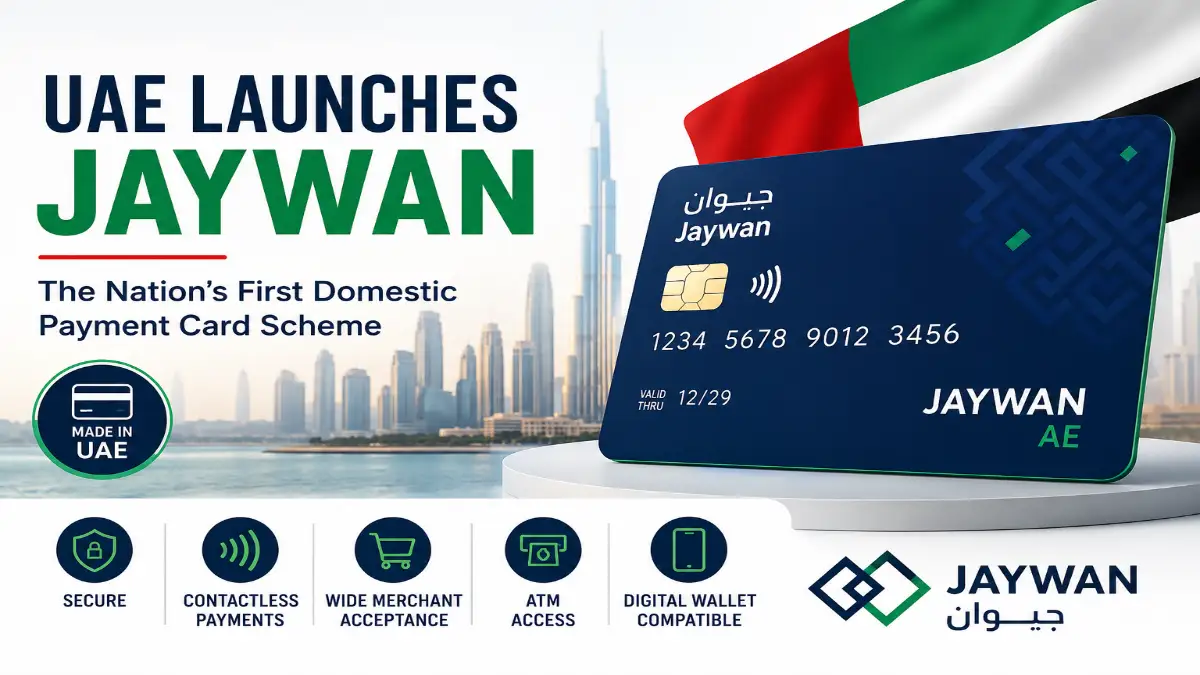
The United Arab Emirates (UAE) has taken a major step towards financial independence by officially launching ‘Jaywan’. This marks the country’s first domestic card payment scheme or national payment card scheme. Supported by the Central Bank of the UAE (CBUAE) and operated by Al Etihad Payments (AEP), Jaywan offers a local alternative to international payment networks like Visa and Mastercard.
This initiative will strengthen the nation’s domestic payment system and provide banks with a locally managed card option. It is being rolled out in phases through banks, licensed financial institutions, and exchange houses. These cards are designed for everyday use at retail outlets, online stores, ATMs, and via digital wallets.
In Emirati Arabic, the name Jaywan means precious pearl. It pays tribute to the nation’s heritage and the historic pearl-diving industry that shaped the local economy. Launched in early 2025, the initiative aims to keep payment data within the UAE while providing consumers and businesses with faster, more cost-effective payment solutions.
Why Jaywan Matters for You
For years, most card transactions in the UAE relied on international networks. While reliable, these systems often entail high fees and involve transmitting data abroad. Jaywan was launched to change this National payment system.
By processing payments locally via UAESwitch, the system stops intermediaries.
According to reports, this could help eligible lower merchant fees and promote the use of cards for domestic payments. For customers, this could mean more payment options and easier card usage in the UAE.
In fact, Jaywan’s primary objective is to provide the UAE with its own national payment card network, thereby reducing reliance on foreign payment systems for local transactions.
Also, small and medium-sized businesses stand to benefit the most from this change. Lower processing fees mean higher profit margins for them. For everyday users, it offers a secure way to spend money while supporting the local economy.
How It Works and Where to Use It
The UAE Jaywan card functions just like any other debit or credit card. You can use it at point-of-sale terminals in stores, to withdraw cash from ATMs, and for online shopping. In this system, the transaction is settled locally. This results in faster payments and ensures that your financial data remains within the country, which is a better step for your privacy.
Al Etihad Payments has partnered with major global networks including Discover, Mastercard, Visa, and UnionPay. This means you are not limited to using the card only within the UAE. Depending on your bank, you can obtain a co-badged card that works internationally. If you travel, check with your bank to see if global acceptance is enabled for your specific Jaywan card; if not, make sure to get it started.
Digital wallet integration is also part of this plan. Samsung Wallet already supports ‘Jaywan,’ allowing users to make payments by tapping their phones. Integration with Apple Pay and Google Pay is also expected soon, which will make the transition easier for tech-savvy users.
Types of Cards Available
Banks are issuing Jaywan cards in a phased manner. You will generally find two main types of these:
- Mono-badge cards: These carry only the Jaywan logo. They work perfectly within the UAE and GCC countries but may have limited use abroad.
- Co-badge cards: These offer the Jaywan facility in partnership with international providers like Visa or Mastercard. They deliver dual benefits: superior performance at the local level and global reach.
Major banks such as First Abu Dhabi Bank and Commercial Bank of Dubai have started issuing these cards. Options range from basic debit cards to premium prestige cards, offering benefits like dining discounts, travel deals, and shopping offers. Prepaid options are also available for those who wish to keep their spending under strict control.
Benefits for the UAE Economy
The purpose of promoting the Jaywan Card goes beyond mere convenience. It is a strategic move towards economic independence. By establishing its own payment infrastructure, the UAE reduces its reliance on foreign systems. This safeguards national security and ensures that economic data remains under local control.
The Central Bank of the UAE views this as a key part of its digital transformation strategy. The goal is to create a flexible, future-ready financial system that supports economic growth. By lowering costs and increasing efficiency, Jaywan helps make the UAE a more attractive hub for business and innovation.
The Central Bank of the UAE considers this a key component of its digital transformation strategy. Its objective is to create a resilient and future-ready financial system that fosters economic growth. By reducing costs and enhancing efficiency, ‘Jaywan’ helps make the UAE a more attractive hub for business and innovation.
What’s Next for Jaywan and How to Switch
Although the UAE’s Jaywan payment card has already been launched, it is being rolled out in phases. More banks are expected to join this network in the coming months. Al Etihad Payments has entered into agreements to expand the card’s acceptance to other countries, starting with India. This mutual expansion will make Jaywan useful for travellers and expatriates who send money back to their home countries.
An awareness campaign is currently underway to help people understand how to make the switch. If your bank offers the Jaywan facility, you might receive the new card automatically, or you may need to request it. Check with your bank or financial institution to find out what options are available for your account.
Jaywan is a new payment platform launched in the UAE. It combines modern technology with local values, offering a secure, efficient, and culturally appropriate method for financial transactions. As more merchants and banks adopt this system, it is likely to become the standard for everyday transactions across the country.